Raranga: From Harakeke to Jewellery
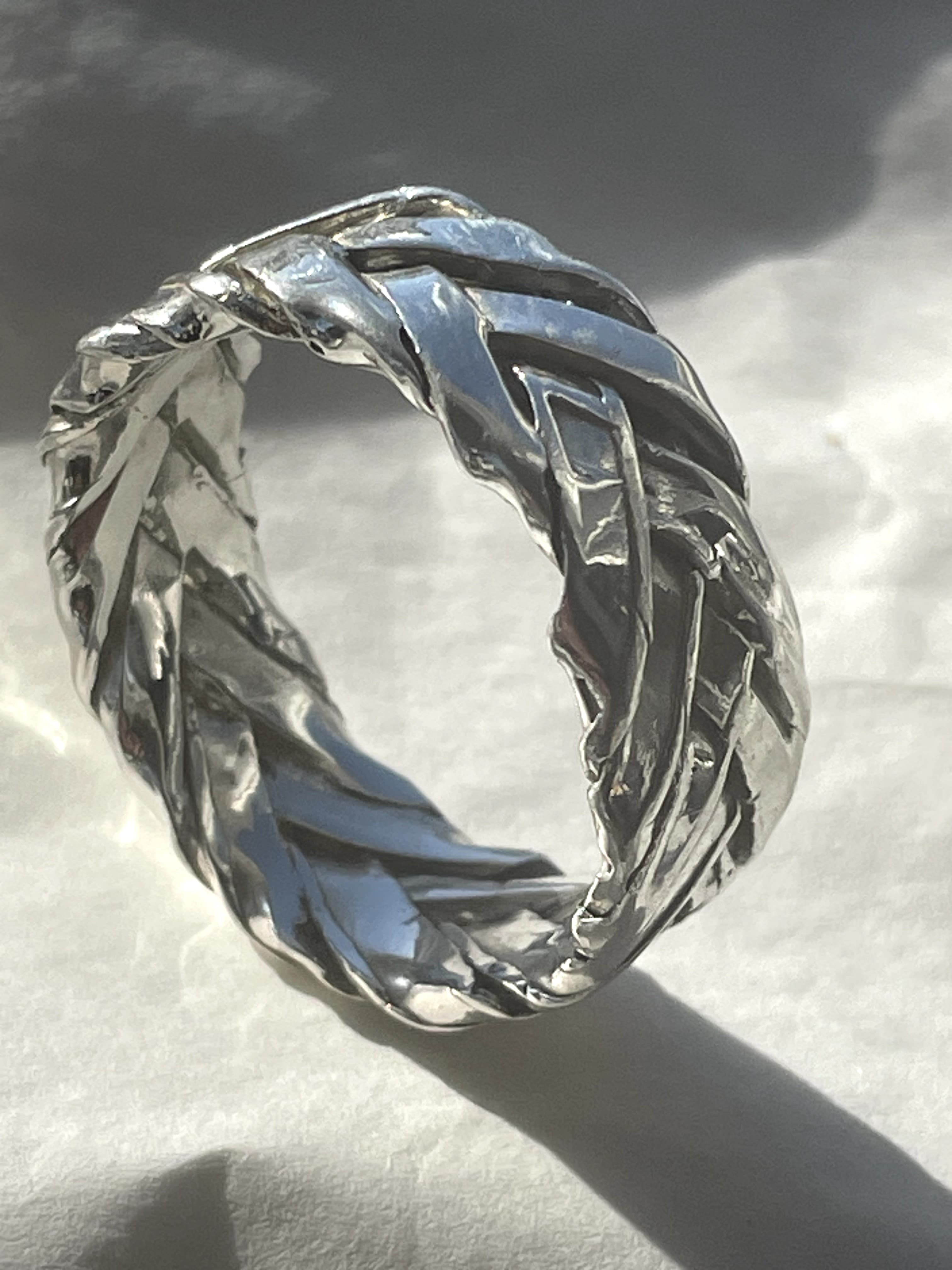
One of my favourite collections is inspired by raranga - the traditional Māori art of weaving.
For generations, harakeke has been woven into practical and beautiful taonga. Every weave carries skill, patience, and knowledge passed down through generations.
I'm not trying to recreate traditional raranga in metal. Instead, I wanted to take inspiration and explore how those same patterns could be expressed through jewellery.
The journey begins in wax.
Rather than weaving harakeke, I cut flat strips of jeweller's carving wax to carefully measured widths. Each strip needs to be consistent so the finished weave sits evenly once it's cast in metal.
From there, I hand weave the wax using simple three-plait and five-plait patterns. Working with wax is surprisingly delicate - it bends differently to natural fibres and can easily break if pushed too far. Every weave requires patience and a steady hand.
Once the woven form is complete, it's transformed through the lost wax casting process into silver, preserving every crossover and every detail created during the weave. I love that it's never 'perfect' and that no two rings are the same.
What I love most about these pieces is the way they capture movement. The weave wraps continuously around the ring, with no obvious beginning or end, creating a design that feels both strong and flowing.
For me, these rings represent connection - between people, between generations, and between tradition and contemporary design. They are inspired by the beauty of raranga while becoming something uniquely their own.